touchpoint • shipped 2025
sensory regulation system

TLDR;
designed wearable device to reduce self-injurious behavior for a student with sensory deprivation
role
design lead
timeline
october 2024 → july 2025
team
5 students
skills
UX design
user research
prototyping
→ overview
After the success of our "Toys for Thomas" initiative, we continued connecting with co-designers to create assistive technology for students with special needs.
We partnered with Daryel, an 11-year-old who struggles with sensory deprivation.
As a result of being understimulated, Daryel is prone to self-injurious behaviors (SIBs), namely repeatedly hitting his head and chin with his left arm, posing a risk for brain injury down the line.
→ user research
Previous solutions, such as restrictive clothing and arm braces, only injured Daryel further due to the plastic material.
Through our interviews, we determined that Daryel…
responded best to gentle tapping motions on his head
consistently sought sensory input around his neck and left shoulder
couldn't deal with the same sensory input for a long period of time.
Through these interviews, we also engaged with Daryel's community and those at Lovett to determine co-designer needs:
Parents
Compact device, durability, easy set-up
Caretakers
Adjustable sensory input, digital interface
Pediatric neurologists
Safe stimulatio npoints (away from neck)
→ design goals & iterations
We needed to design a brace to provide tapping and vibration inputs as an aid to distract from self-injurious behaviors.
Early concepts explored modifying existing sensory products, including massaging neck pillows. However, testing revealed these were too location-specific and lacked adaptability.
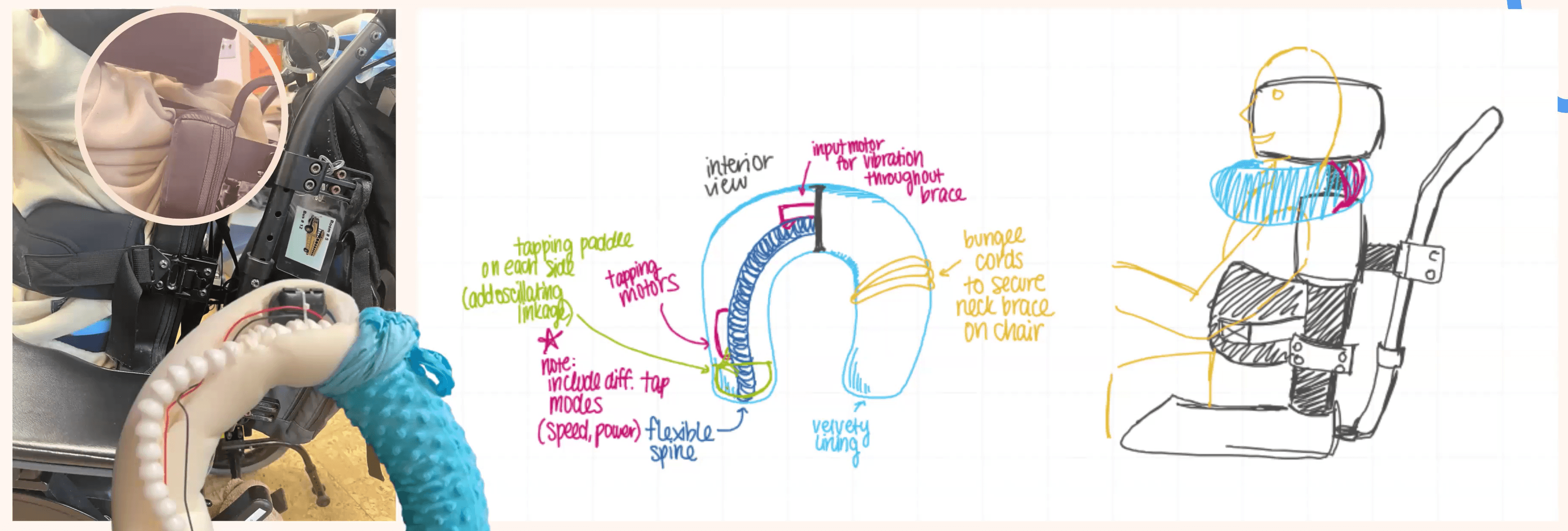
My sketches of initial neck pillow-based design for Daryel's brace, attached to wheelchair
We pivoted to a modular cuff-based system, allowing stimulation across different body areas depending on Daryel's needs in the moment. Within the wearable cuff, localized vibration and motion-based stimulation could be controlled remotely while ensuring Daryel remained safe.
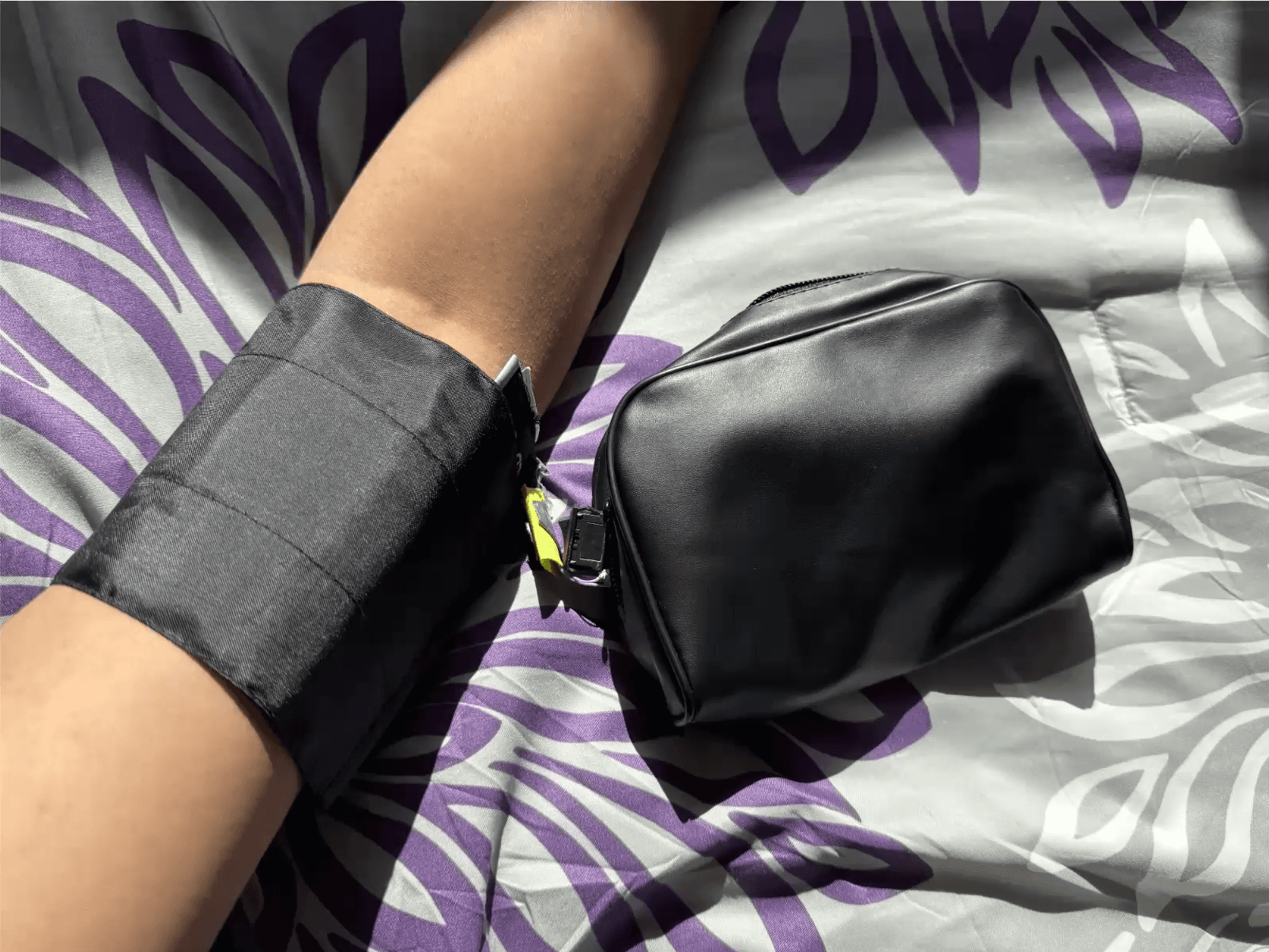
Trying the motor cuff on ourselves to test…
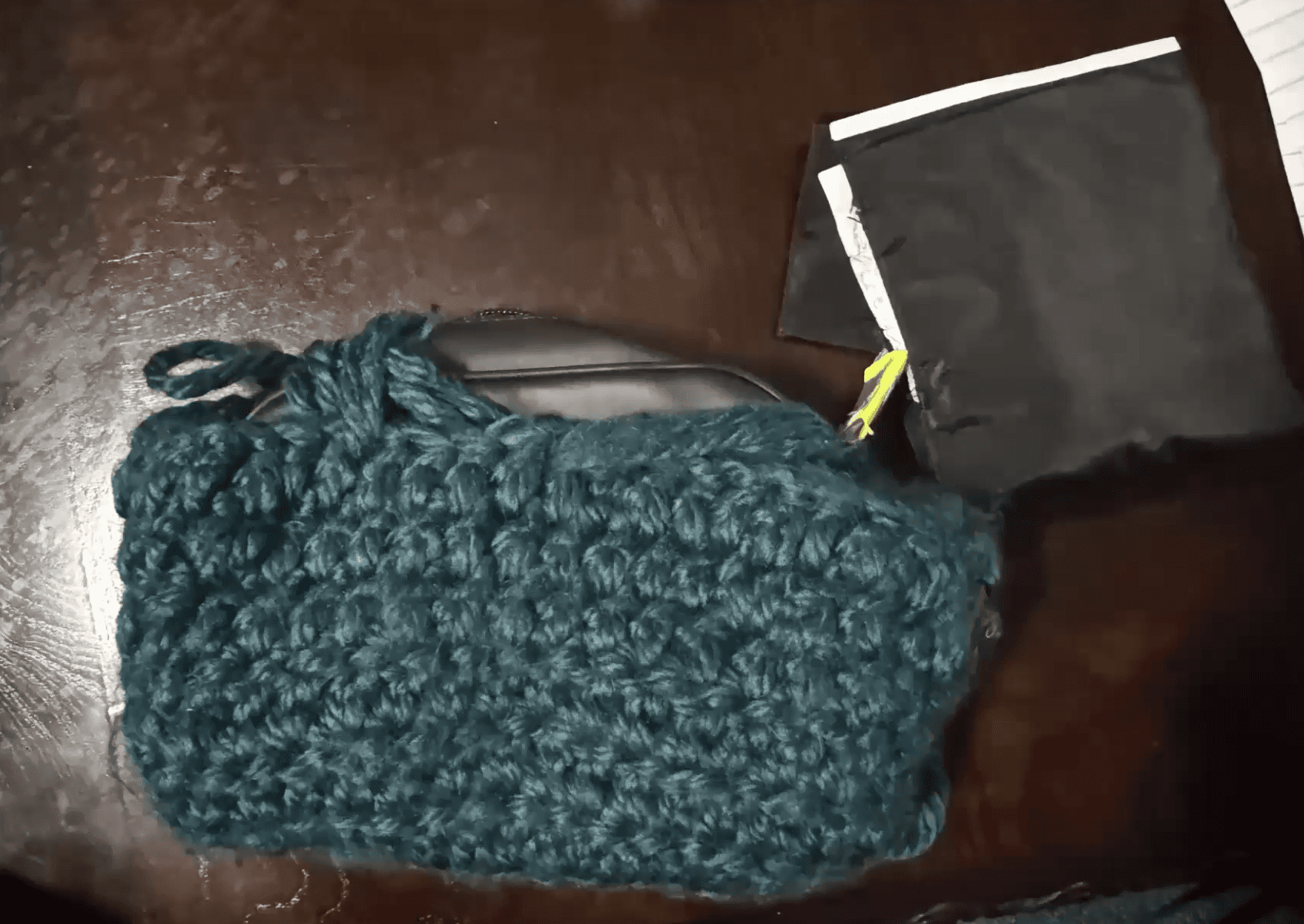
I knitted a sleeve for Daryel's cuff!
Early testing with Daryel showed noticeable reductions in SIBs!
Initial testing demonstrated promising results, with positive caregiver feedback and increased engagement from Daryel.
To strengthen validation, we designed a blind testing protocol in collaboration with local medical advisors, handing off the cuff for a full week while sensory input was randomly controlled throughout each school day.
→ interface development
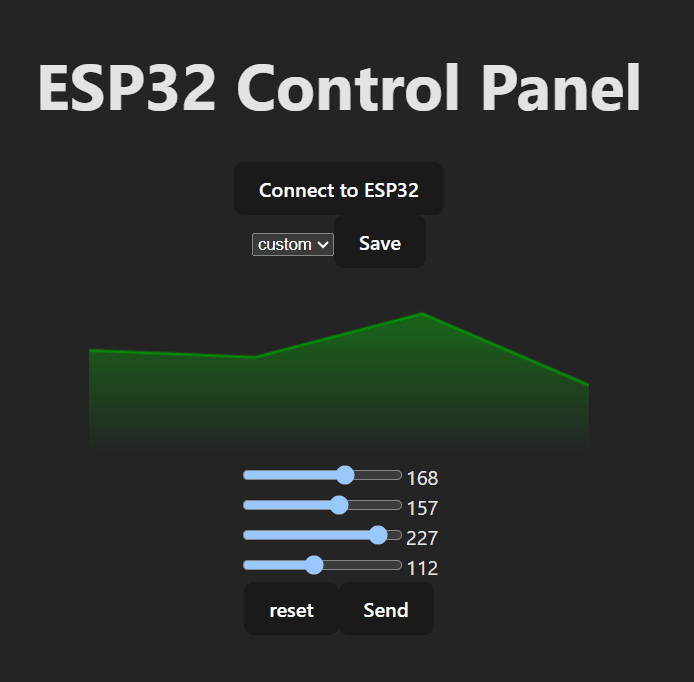
In order to create a centralized control for Daryel's cuff, a frontend was designed online (create2025.vercel.app), allowing both caretakers and family members to control the cuff from any device.
Currently, the user interface allows for controlling of 4 servos within the cuff, with an intensity slider (0→255) for each servo as well as a graph displaying the motor control profile. The two features requested from Daryel's caregivers included a timer and a motor control log, where certain presets could be saved and reused.
Testing first interface with motor control cuff!